
What is a Symbiotic Relationship?
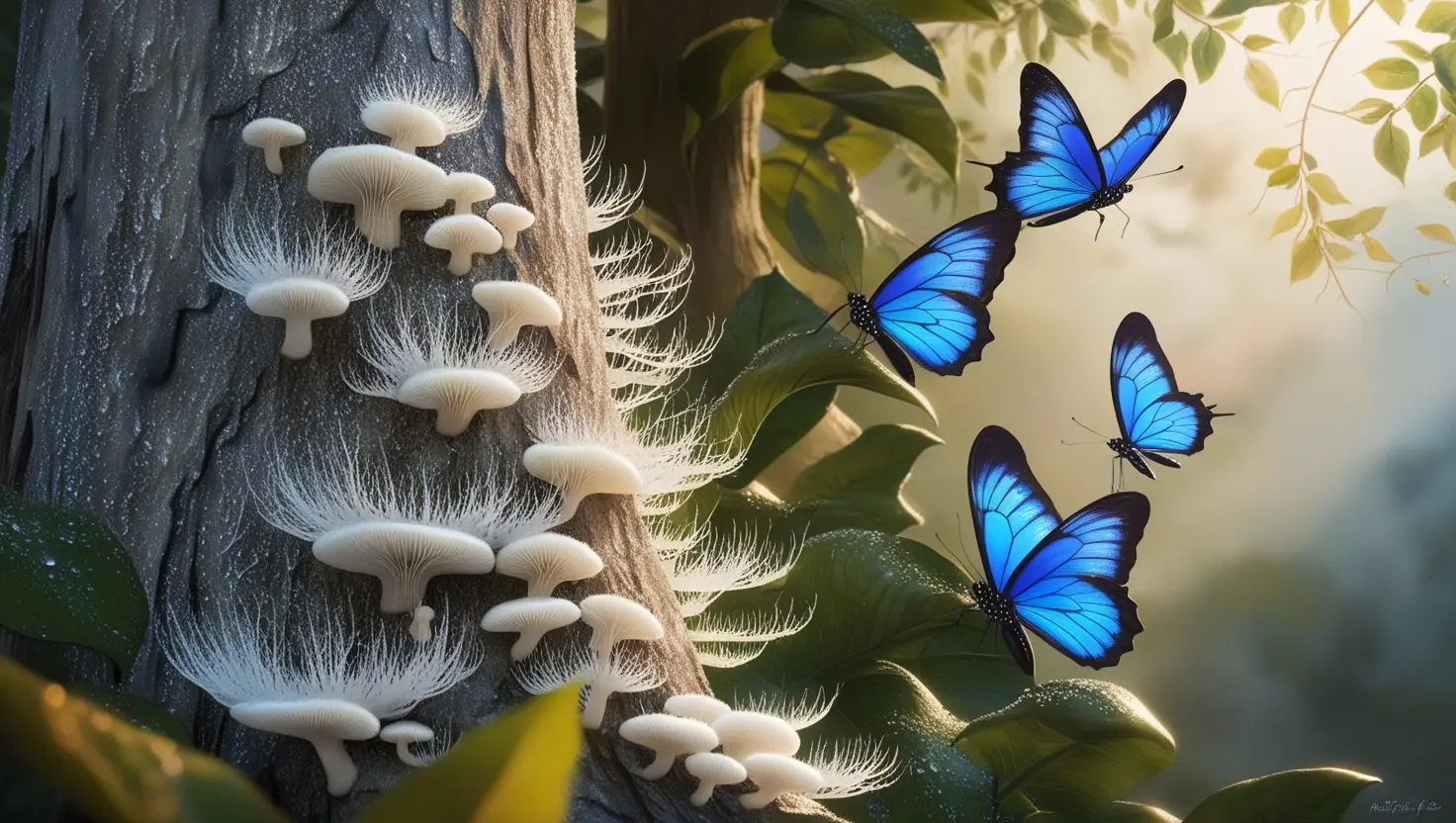
A symbiotic relationship is the relationship between two organisms that live closely together and typically benefit from the relationship. There are many examples of symbiotic relationships in nature, and we will be discussing some of them in this article.
Symbiosis
Symbiosis is one of nature’s most fascinating phenomena, demonstrating how different species can live in close association with mutual benefits, detriments, or neutral effects.
From the microscopic world to vast ecosystems, symbiotic relationships play crucial roles in maintaining the balance and health of our planet. This is why we are looking at this today as it is very important to our very existence.
The following are some remarkable examples of symbiotic relationships that I think illustrate nature’s incredible partnerships.
1. Mutualism: The Bee and the Flower
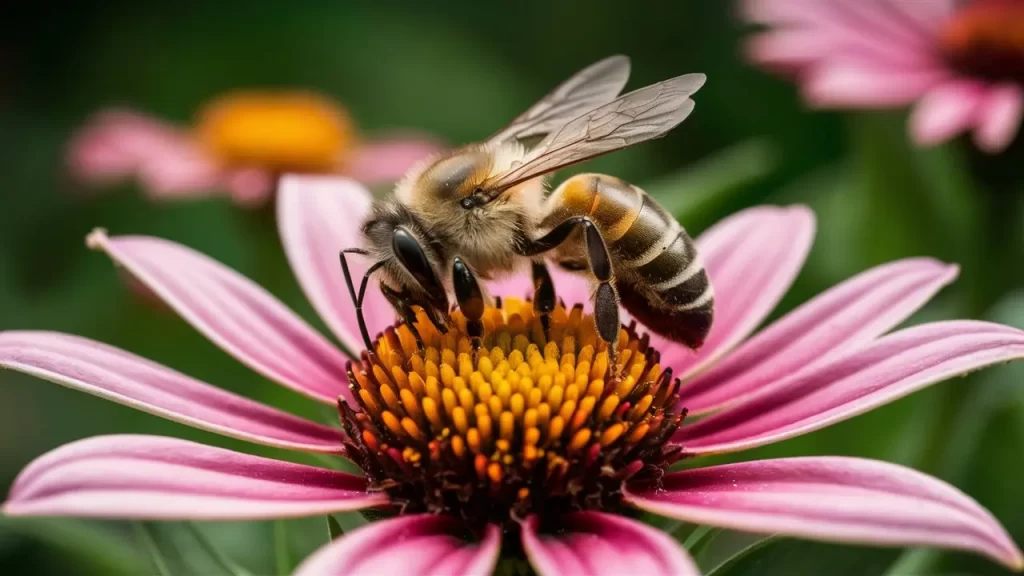
Bees and plants that bloom flowers share one of the most well-known mutualistic relationships. Bees visit flowers to collect nectar, which they use to make food.
In return, the bees inadvertently transfer pollen from one flower to another, facilitating plant reproduction.
This mutualistic relationship is essential for the reproduction of many flowering plants and the production of fruits and seeds. The vast amounts of plants we see all around, are mostly attributed to the mutualism I mentioned.
It also supports the survival of bee populations, which are crucial pollinators for numerous crops and wild plants.
2. Commensalism: The Barnacle and the Whale
What are Barnacles and the Whale?
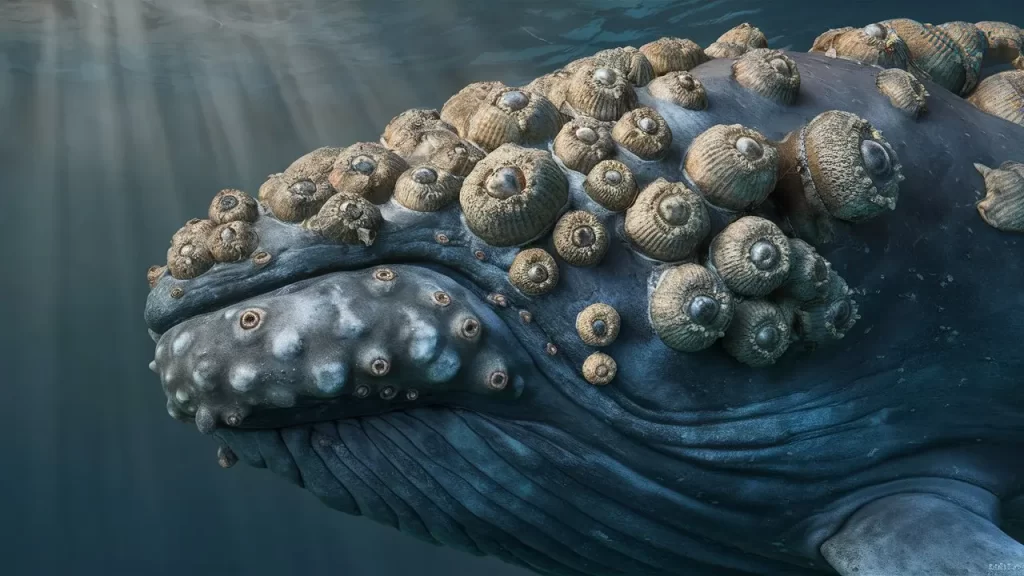
Barnacles are a type of crustacean that attach themselves to various surfaces in aquatic environments, including the skin of whales.
These small, shelled creatures are known for their unique lifestyle of attaching themselves to a host and filtering food from the surrounding water.
They often attach themselves to the bodies of whales, and as the whale moves through the water, the barnacles benefit by being transported to nutrient-rich waters, where they can feed on plankton.
This commensal relationship showcases how one species can benefit from another without causing harm.
The barnacles gain access to food sources while traveling in style, and the whale remains unaffected; and In return, the barnacles provide a form of camouflage for the whale, helping to break up its outline and make it less visible to predators, or even prey.
Ultimately, both species benefit from this relationship, displaying a unique example of
coexistence in the natural world. It highlights the interconnectedness of different species and how they can work together to thrive in their environment.
3. Parasitism: The Tick and the Mammal
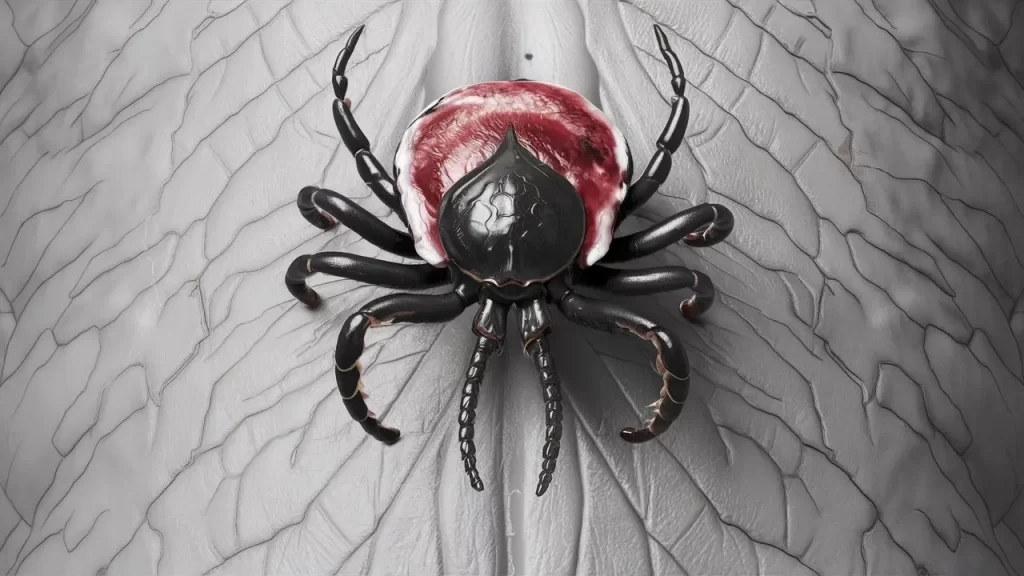
Ticks are parasites that attach themselves to mammals, such as deer or humans, and feed on their blood. The tick benefits by obtaining nourishment, while the host may suffer from blood loss, irritation, and potential transmission of diseases.
Parasitism highlights the negative impact one species can have on another. Understanding parasitic relationships is crucial for managing and preventing diseases that can be transmitted between species, as a result.
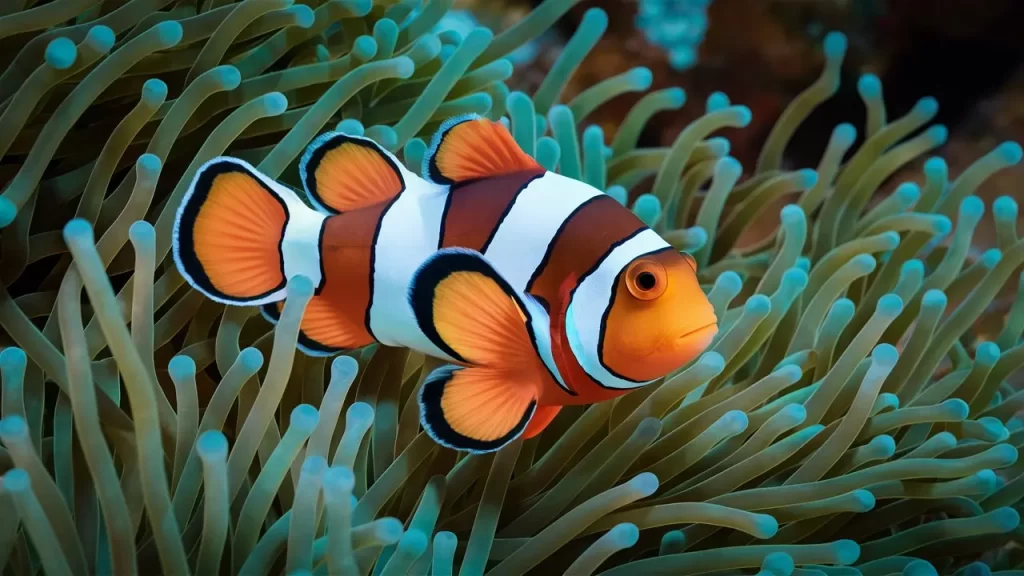
4. Mutualism: The Clownfish and the Sea Anemone
What are Sea anemones?
Sea anemones are marine creatures that belong to the phylum Cnidaria. They are closely related to corals, jellyfish, and hydras.
Sea anemones are named after the terrestrial flower anemone because of their brightly colored, flower-like appearance.
They are typically found in shallow waters attached to rocks or coral reefs.
Sea anemones are known for their unique predatory behavior. They use their tentacles, armed with stinging cells called nematocysts, to capture prey such as fish, shrimp, and other small marine organisms.
Once caught, the toxins injected by the nematocysts paralyze the prey, and then the sea anemone will consume it using its central mouth.
Despite their seemingly sedentary lifestyle, sea anemones are actually quite mobile.
They can move slowly across the seabed by contracting and expanding their bodies.
Some species can even detach themselves and float to a new location.
Sea anemones play a vital role in their ecosystems, providing shelter for small fishes that seek protection among their tentacles.
One such fish is the Clownfish, which lives among the venomous tentacles of sea anemones.
The clownfish are protected from predators by the anemone’s stinging cells, while the anemone benefits from the clownfish’s waste, which provides nutrients.
This mutualistic relationship exemplifies how species can evolve to benefit each other.
The clownfish and anemone both gain protection and sustenance, enhancing their survival in the competitive marine environment.
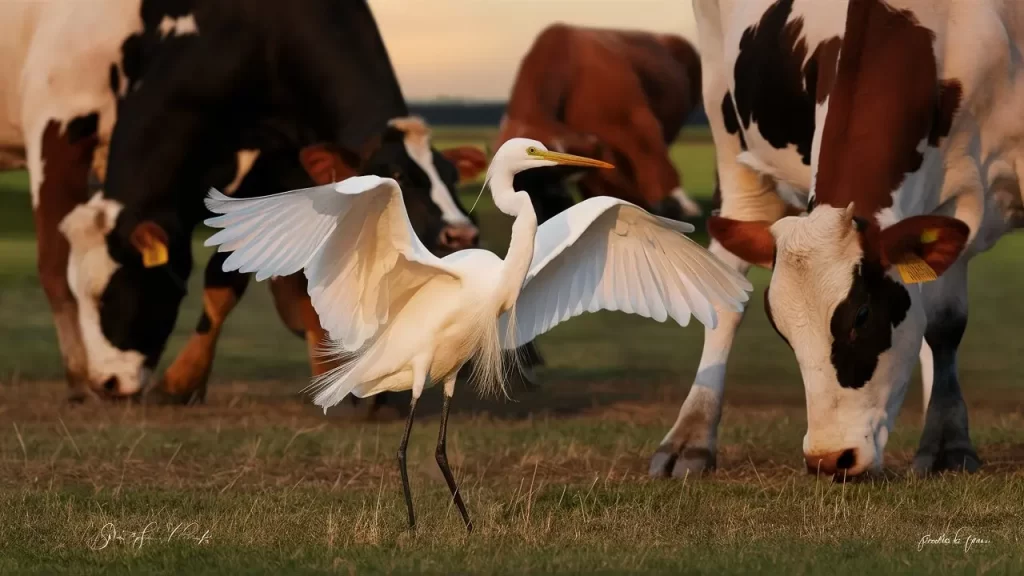
5. Commensalism: The Egret and the Cattle
What is an Egret?
An egret is a type of heron that is known for its long, slender neck and bright white plumage.
They are commonly found near bodies of water, such as lakes, rivers, and marshes, where they
hunt for fish, frogs, and other small aquatic creatures.
Egrets often follow cattle and other large herbivores as they graze. The cattle disturb insects
and other small animals, which the egrets then eat. The cattle are largely unaffected by the
presence of the egrets.
This commensal relationship shows how one species can take advantage of another’s behavior
to find food more easily, demonstrating the interconnectedness of species within an ecosystem.
This symbiotic relationship benefits both the egret and the cattle; the egret gets an easily
accessible food source while the cattle receive the benefit of having insects and parasites
removed from their vicinity. This underscores the importance of preserving biodiversity and
understanding the interconnectedness of all living organisms in nature.
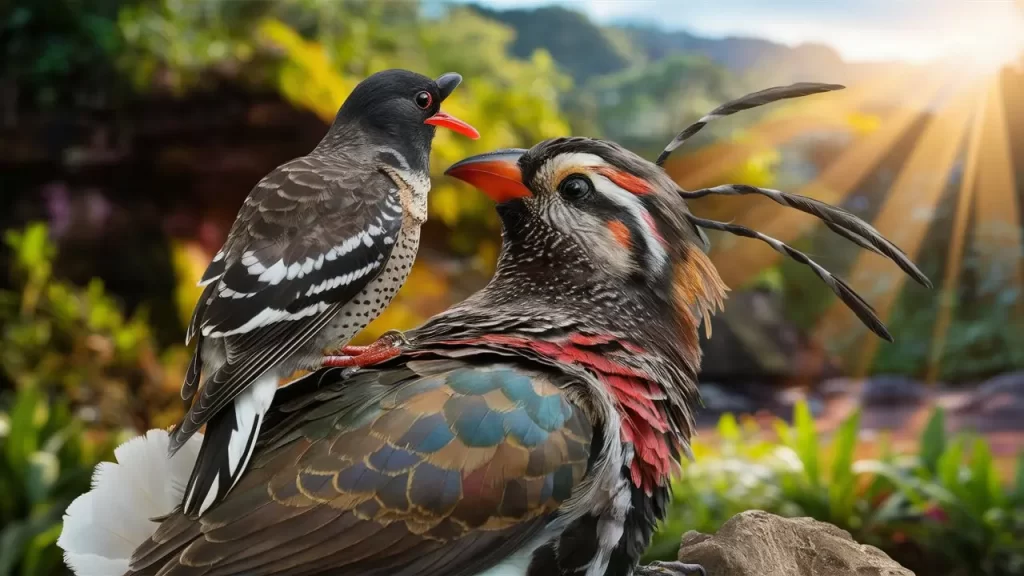
6. Parasitism: The Cuckoo and the Host Bird
What is a Cuckoo and the host Bird?
A cuckoo is a type of parasitic bird that lays its eggs in the nests of other bird species, known as host birds.
The cuckoo does not build its own nest or raise its own young, instead relying on the host bird to incubate its eggs and care for its chicks.
This behavior allows the cuckoo to conserve energy and resources, while the unwitting host bird unknowingly raises a chick that is not its own.
Some host birds have developed defenses against cuckoos, such as recognizing and removing cuckoo eggs from their nests, but the parasitic bird continues to adapt and find ways to outsmart its hosts.
As mentioned, Cuckoos lay their eggs in the nests of other bird species. The host birds then raise the cuckoo chicks, often at the expense of their own offspring, which may be outcompeted or even pushed out of the nest by the cuckoo chick.
Parasitic relationships like this highlight the complex strategies some species use to ensure their survival, often at a significant cost to others.
Understanding these dynamics is important for studying ecological interactions and evolutionary biology.
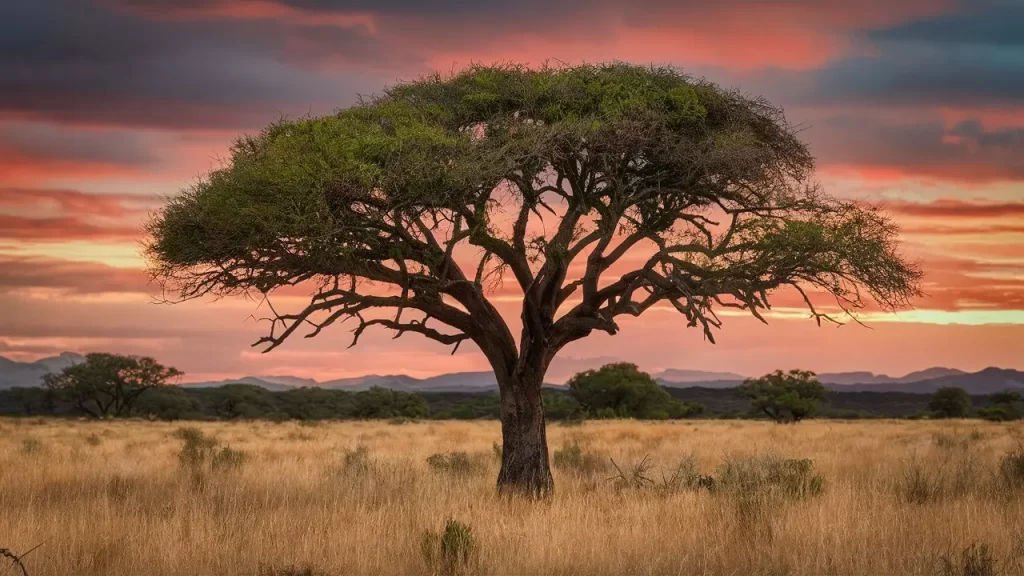
7. Mutualism: The Ant and the Acacia Tree
Certain species of ants live in the hollow thorns of acacia trees. The ants protect the tree from herbivores and clear away competing plants.
In return, the acacia provides the ants with food and shelter. This mutualistic relationship benefits both the ants and the acacia tree.
The ants get a constant supply of nourishment in the form of nectar and other sugary substances secreted by the acacia, while the tree is able to thrive without the threat of being overtaken by other plants or consumed by herbivores.
The ants also defend the tree aggressively against any potential threats, including other insects or animals that may try to harm the tree. They do this by swarming around the intruder and biting or stinging them, effectively protecting the tree and its resources.
Overall, the partnership between the ants and the acacia tree is a prime example of how different species can work together to survive and thrive in their ecosystem.
It is a delicate balance that has evolved over time, benefiting both parties and ensuring their continued success in the natural world.
This mutualistic relationship is a prime example of co-evolution, where two species evolve traits that benefit each other.
It demonstrates the intricate and mutually beneficial connections that can develop between species.
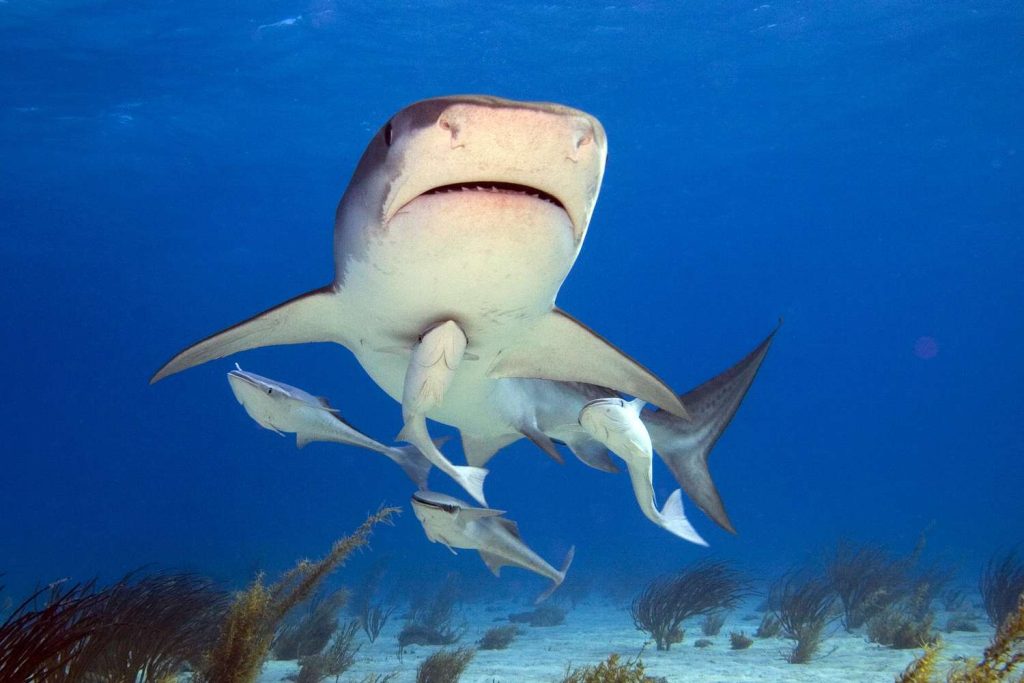
8. Commensalism: The Remora and the Shark
Remoras, also known as suckerfish, attach themselves to sharks using a specialized sucker on their heads. They feed on the scraps of the shark’s meals and gain protection by being close to the formidable predator.
This relationship is a clear example of commensalism, where one species benefits from another without affecting it. It underscores the diverse ways in which animals can find food and protection in their environments.
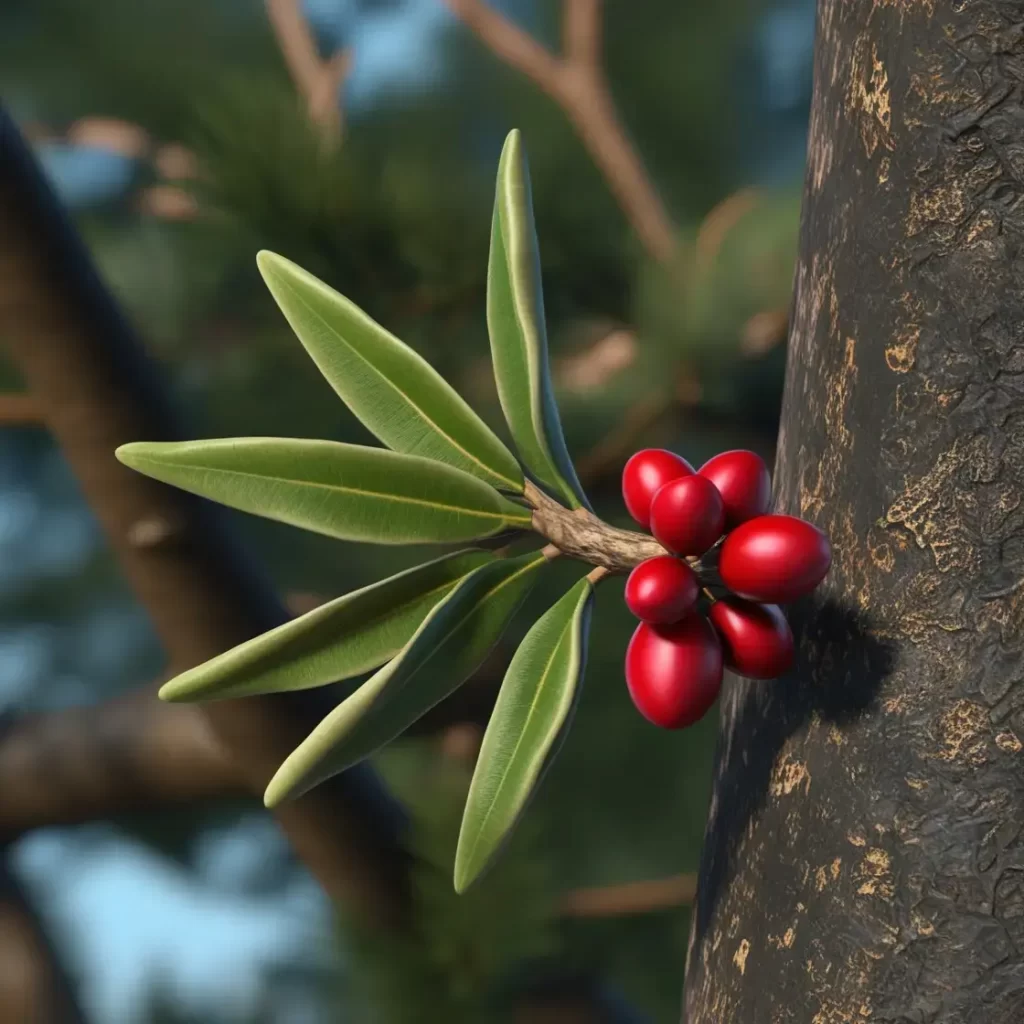
9. Parasitism: The Mistletoe and the Tree
Mistletoe is a parasitic plant that attaches itself to the branches of trees and shrubs. It extracts water and nutrients from the host plant, often weakening it over time.
Parasitic plants like mistletoe can significantly impact their host plants and surrounding ecosystems. Studying these relationships helps us understand the balance of power in nature and the potential consequences of parasitism.
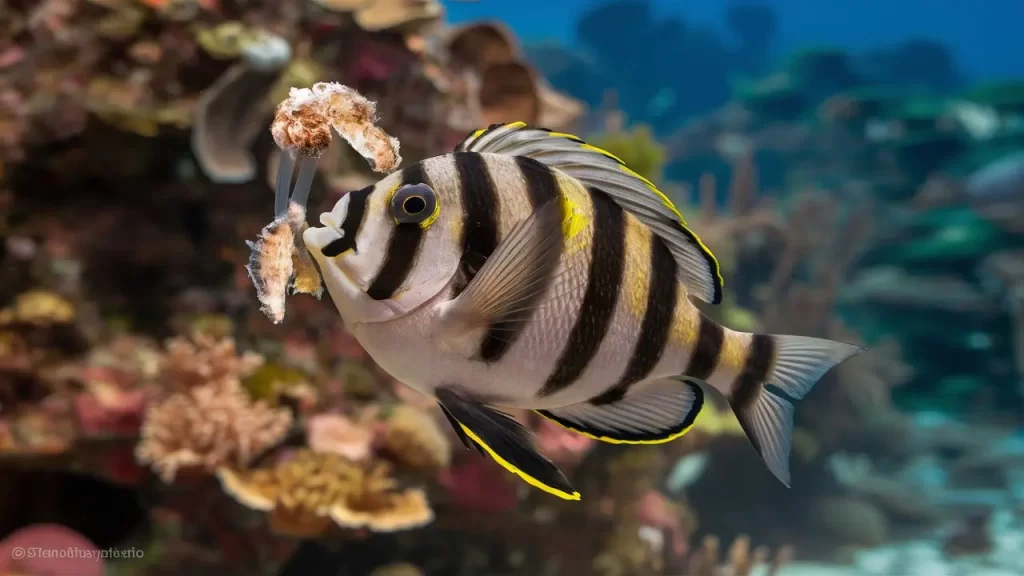
10. Mutualism: The Cleaner Fish and the Larger Fish
Cleaner fish, such as cleaner wrasses, feed on parasites and dead skin from larger fish. The larger fish benefit from reduced parasite loads and cleaner skin, while the cleaner fish get a steady food source.
This mutualistic relationship is essential for the health of marine ecosystems. It demonstrates how different species can cooperate for mutual benefit, maintaining the overall balance and health of their environment.
Conclusion
Symbiotic relationships are a testament to nature’s ingenuity and the interconnectedness of all living things. From mutualism and commensalism to parasitism, these interactions illustrate the diverse ways in which species coexist and impact each other. By studying these relationships, we gain a deeper appreciation for the complexity of ecosystems and the delicate balance that sustains life on our planet. On the other hand, we can show you the similarities humans have with all of these characteristics mentioned. Click here to read.